
How it works
What is Anaerobic Digestion?
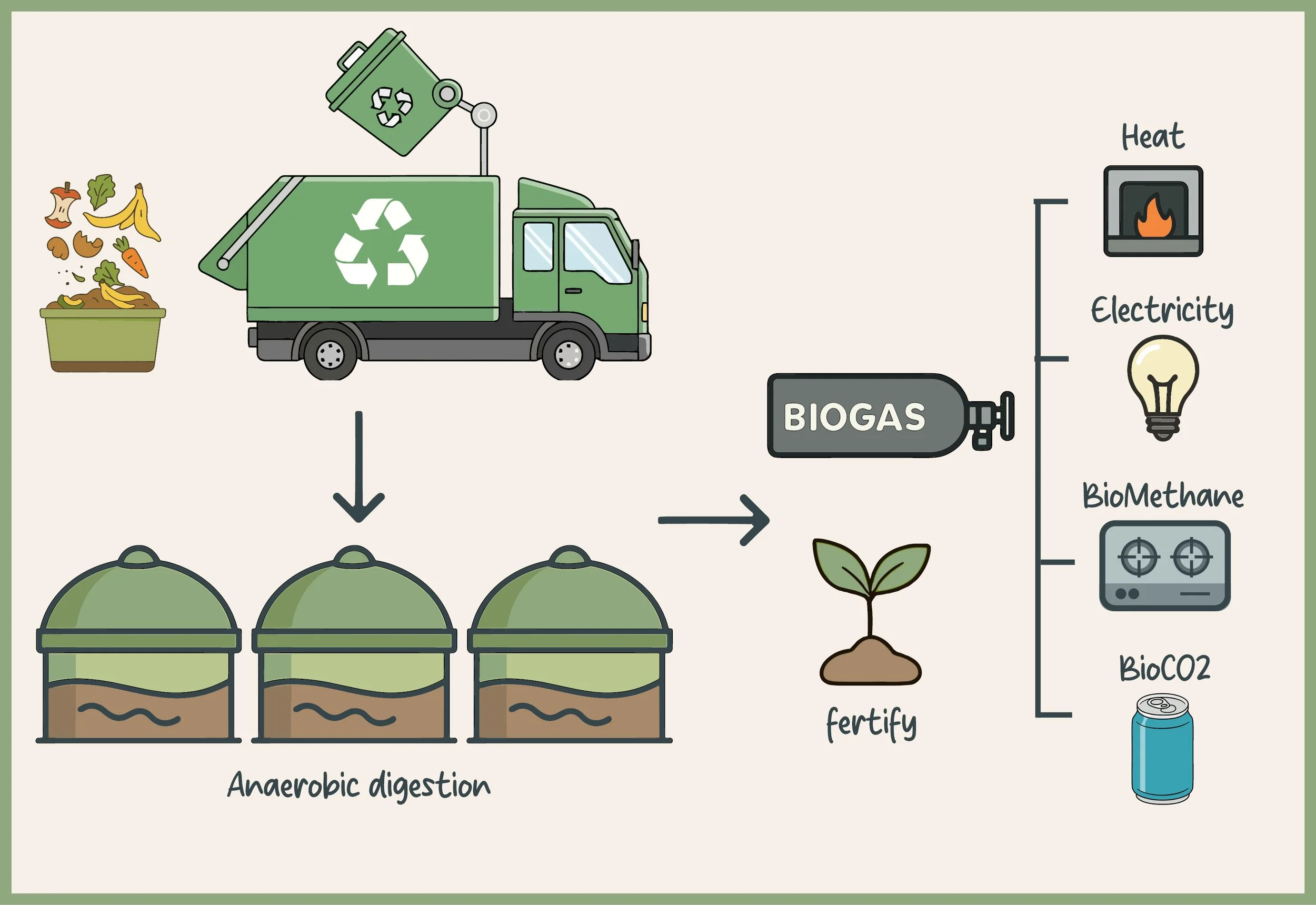
Anaerobic Digestion (AD) is a natural process where micro-organisms break down organic waste such as food scraps. This produces two valuable resources; biogas and digestate. Biogas gas offers a low-carbon energy alternative to fossil fuels. It can be used for a number of applications as shown in the diagram below.

Biogas
Biogas is collected in the bubble on top of the digester and is used for heating and electricity generation within the facility with excess electricity being injected back into the national grid.
Ecogas works with First Renewables to upgrade biogas into BioMethane and BioCO2, a New Zealand first. BioMethane is injected into the gas grid as a renewable form of energy for residential and industrial supply. BioCO2 offsets the needs of T&G glasshouses and the wider food and beverage industry.

Digestate - fertify™
Digestate is a nutrient rich substance which is being used by farmers as a fertiliser.
Ecogas currently supplies digestate under the fertify™ regenerative fertiliser brand.
Frequently asked questions
-
Anaerobic Digestion (AD) is a natural biological process where micro-organisms break down organic waste such as food scraps in a sealed system, without oxygen. This produces valuable resources in the form of energy (heat and gas)) and digestate. The gas can be:
Used to generate electricity to power the facility or exported into the grid
Used as unrefined biogas, a renewable fuel for boilers
Upgraded into bioCO¬2 and a renewable, alternative to natural gas.
The digestate is separated into liquid and fibre. The liquid digestate is a nutrient rich substance called fertify™. It is used as fertiliser that returns the nutrients from food to our productive land and replenishes carbon. The fertiliser, is an alternative to synthetic, imported fertilisers.
The digestate fibre has a number of uses including as a biomass fuel source for boilers.
-
Organic waste, such as the following can be processed in an anaerobic digester:
Inedible food including unsafe food, food scraps, bones and eggshells.
Commercial food waste including retained samples, supermarket waste, quality testing samples.
Industrial and manufacturing by-products, wash cycles and gravies.
• Green garden waste (grass clippings, flowers etc)
The following items are removed as contamination during the pre-processing stages:
All packaging including compostable and biodegradable packaging, glass and tins.
• General household rubbish such as nappies and cutlery.
• Prohibited waste including paints, batteries, medical waste and poisons.
-
Yes. Each facility goes through multiple rounds of rigorous safety in design planning, utilising specialist expertise.
It is important to note that the gas produced is low pressure and is very different from bulk fuel storage. Regardless, all of our facilities are designed to strict gas safety standards.
The digestate or fertiliser produced is pastuerised to remove any harmful bacteria or pathogens, making it safe to handle. The digestate is produced in accordance to the internationally recognised BSI PAS 110 regarding the production of quality anaerobic digestate.
All Ecogas facilities are operated under our independently accredited management systems which include the following standards:
- ISO55001 Asset Management,
- ISO45001 Occupational Health and Safety,
- ISO14001 Environmental Management; and,
- NZS7901 Public Health and Safety
Producing high quality, safe products is core to our vision, mission and values.
-
Composting and Anaerobic Digestion (AD) are great complementary tools for different jobs. Most importantly, they both keep waste out of landfills where it produces greenhouse gases. Both composting and AD retain the nutrients from organic waste and return them back to the soil.
The key differences between the two systems are the physical methodologies and processes used, as well as the end products.
Composting tends to require a large amount of space to have efficient air flow for the aerobic process, in which not all of the emissions are captured.
Due to the processes used in composting it is not effective for large volumes of putrescible waste such as dairy or meat products.
Composting is best suited to primarily drier green waste and plant materials, similar to backyard composting systems.
Anaerobic digestion is suited to process traditionally difficult waste streams including fats, oils and proteins such as meat products. Anaerobic digestion can be used to process green waste such as plant clippings as well. Processing green waste at higher volumes requires specific preprocessing stages and produces a greater level of digestate fibre.
-
Currently compostable packaging is difficult to identify from its non-compostable counterparts and unfortunately ends up being removed as a contaminant during pre-processing.
-
Our focus is on providing an alternative to landfill for traditionally challenging organic waste streams. We have developed comprehensive processes in place to separate packaging from the organic material.
All incoming solid waste is sent through a multi-layered decontamination stage called pre-processing. This ensures that all packaging and other contaminating materials are removed to protect the quality of our output products.
The contamination removed is a minor portion of the overall material received and is currently disposed of to landfill due to its mixed composition. This is an area that we are continuing to explore in search of better ways of handling contamination.
Packaging and wrappings from palletised waste sourced via our founding partner EcoStock is recycled through their recycling partnerships.
-
Anaerobic Digestion results in two products; energy (gas, heat and generating electricity) and digestate.
Liquid digestate is used as a biofertiliser on local farmland closing the loop and returning nutrients from food back into the soil.
Ecogas facilities produce energy through the production of biogas which is used to transfer heat back to processing and generate electricity. The remaining biogas is then able to be upgraded into food grade CO2 and a renewable, alternative to natural gas.
All of these products are renewable alternatives for fossil fuel or imported products.
At the Ecogas Reporoa OPF, biogas is used to heat the nearby commercial glasshouses, used to generate electricity to power our plant and converted to a renewable substitute to natural gas.
For the Ecogas Ōtautahi Christchurch Organics Processing Facility we have designed a bespoke solution which will process the more woody and fibrous materials into biomass (e.g. wood pellets) that can be used as a replacement for fossil fuels such as coal.
For more information on the Christchurch Organics Processing facility, click here.
-
Ecogas sites are self-sufficient in energy, producing enough to power the plant. The facilities produce minimal emissions due to the capture of gas during the anaerobic digestion process.
Where possible, Ecogas use backhaul loads (where trucks would otherwise returned empty) to transport organic waste. This minimises transport emissions and reduces additional vehicles on our roads.
Anaerobic digestion produces biogas which when combusted in boilers or engines, is turned into carbon dioxide. As the biogas is biogenic (from recent plant growth as opposed to a fossilised source such as coal), this CO2 is considered neutral from a greenhouse gas (GHG) perspective.
Digestate replaces synthetic fertilisers on farms, reducing reliance on imported materials with a high carbon footprint.
Overall, anaerobic digestion and biomass production has a net positive impact on the environment, by diverting organics from landfill and providing renewable, alternative energy sources. Organics that end up in our landfills produce greenhouse gas emissions as they breakdown.
-
Anaerobic digestion of food waste produces a liquid residue called digestate which can be applied to land as a nutrient rich fertiliser. Synthetic fertilisers are manufactured using energy intensive processes that rely on fossil fuels.
Biofertilisers such as anaerobic digestate can help to displace the demand for synthetic fertilisers by providing nutrients from organic waste streams in fertiliser form. Digestate is locally produced and applied, reducing emissions associated with international supply chains. By creating and using biofertiliser locally, we reduce risks from supply chain disruption.
Additionally, the digestate produced by Ecogas, fertify™, has a high carbon content which is valued in regenerative farming practices for promoting healthy soils.
-
fertify, our brand of biofertiliser, produced during the anaerobic digestion process can be applied to land as a direct substitute to synthetic fertilisers. As with the application of any fertiliser, users need to adhere to all rules, regulations, farm management plans and industry best practices related to the use of fertilisers.
Looking for more information on the biogas industry including anaerobic digestion?
The World Biogas Association website is a great place to get information on the wider industry, the pathway to 2030 and ongoing developments.
The Bioenergy Association of New Zealand (BANZ) has a specific biogas website. It includes information on the circular economy as well as opportunities for biogas in New Zealand and a research centre.