
South Island
Ōtautahi Christchurch Organics Processing facility
Leading the way in sustainable waste recovery.
Ecogas Ōtautahi project is transforming how we value organic waste—turning it into renewable energy and natural fertiliser.
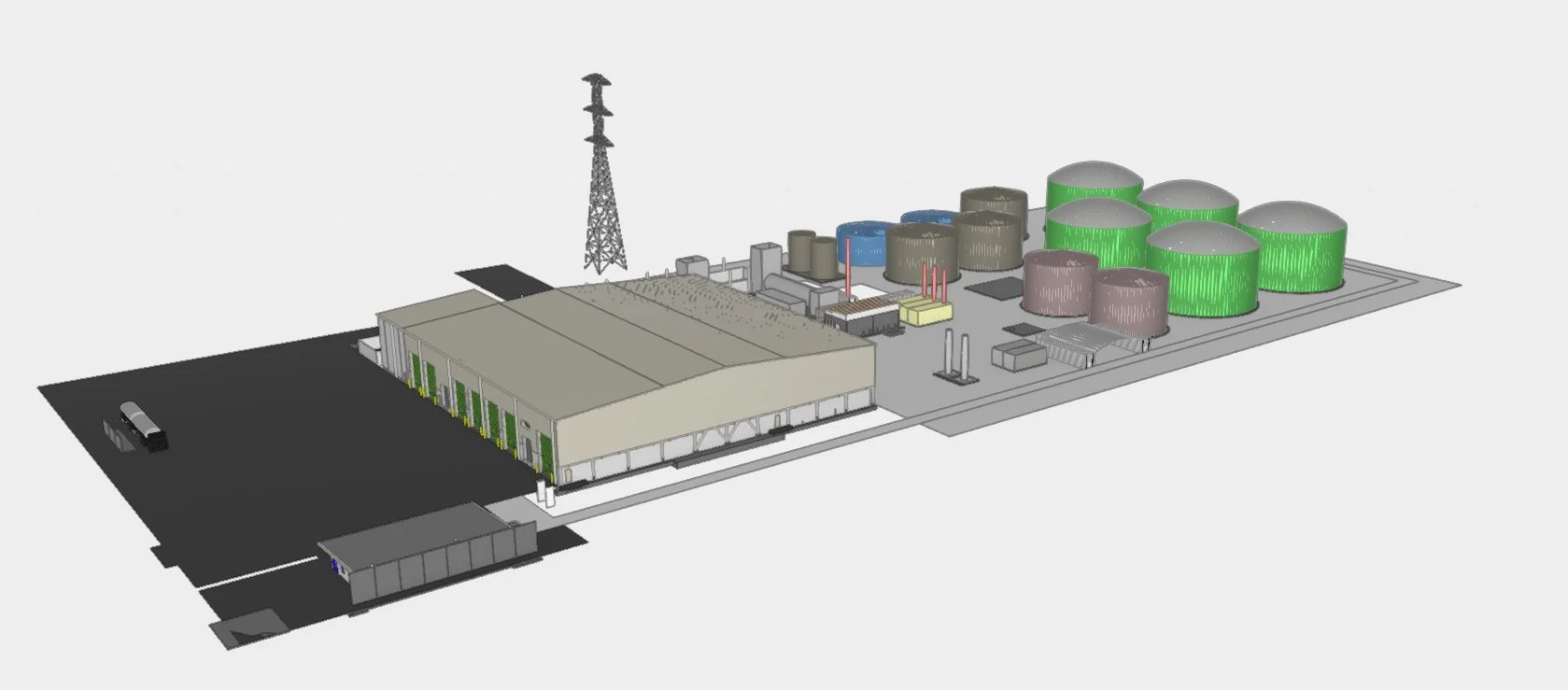
Opening in 2027, the new facility in South Hornby is a major step toward a circular economy for Canterbury. It’s about reducing emissions, regenerating soils, and creating local jobs, all while helping power our local communities in industries with renewable energy.
Why it matters
Keeps organic waste out of landfill to cut greenhouse gas emissions
Manufactures renewable products that are in high demand in Canterbury
Creates local jobs and supports education
Strengthens Canterbury’s circular economy and regional resilience
Helps ease New Zealand’s energy crisis by producing renewable energy locally
Facility highlights
Owned by: Ecogas - a fully New Zealand-owned company
Opening: 2027 | Location: South Hornby
Capacity: 100,000 tonnes/year
(expandable to 200,000)
Capability: household, commercial and industrial organic food and garden wasteTechnology: Anaerobic digestion
+ Biomass processing
Outputs: Renewable electricity, biomass fuel, and fertify™ biofertiliser
Smart Design: Odour control, predictive monitoring, future-ready infrastructure
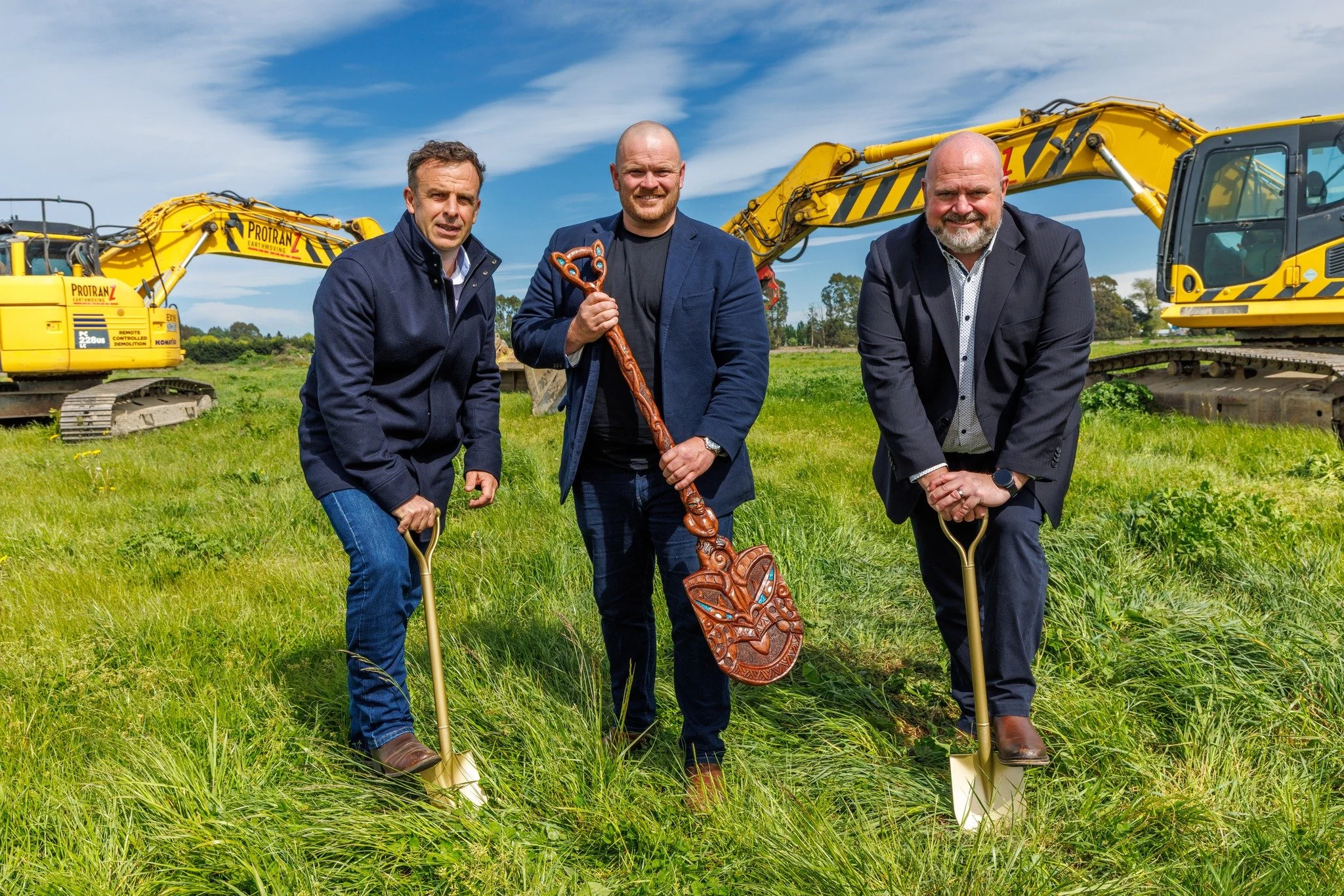
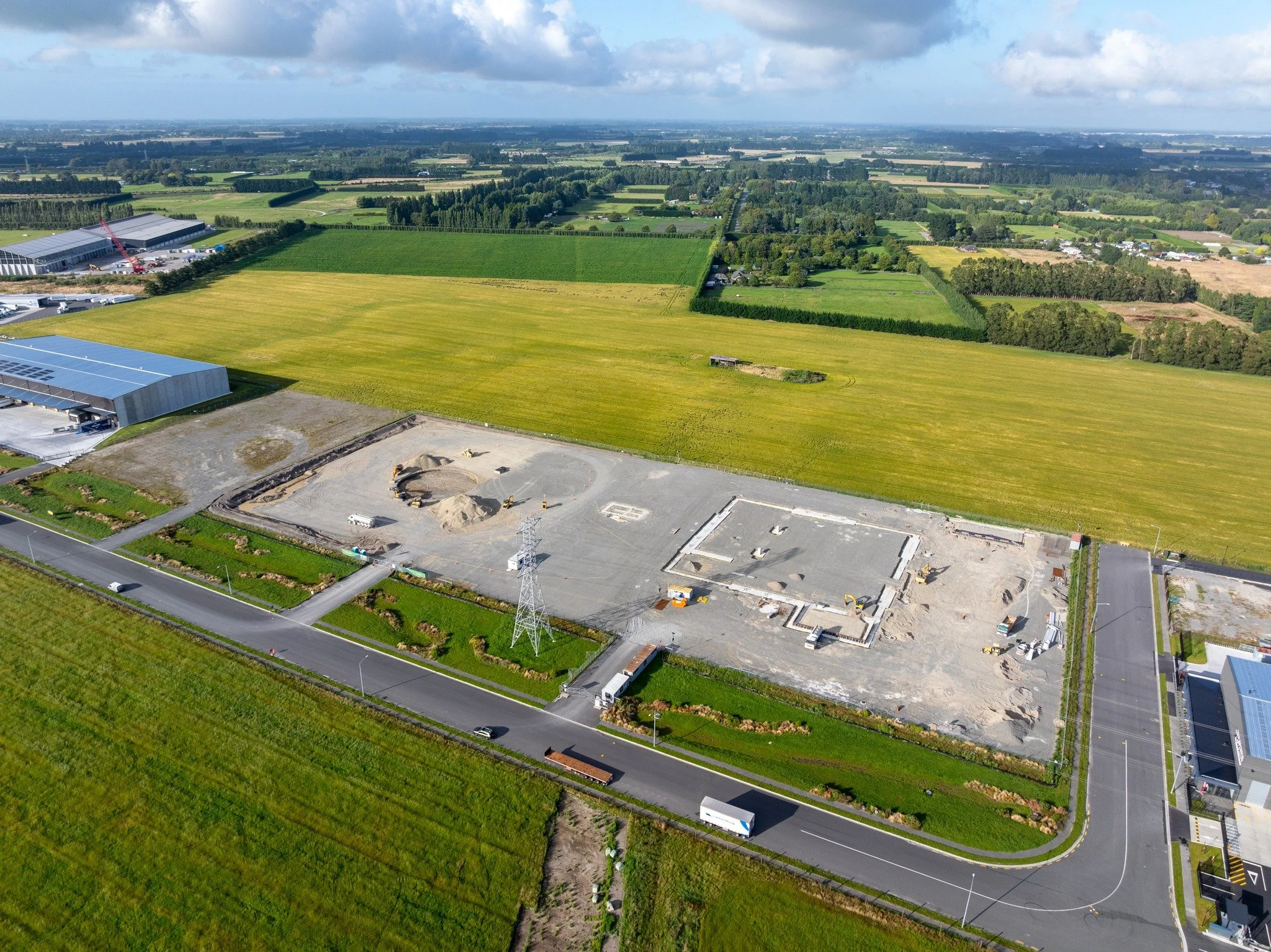
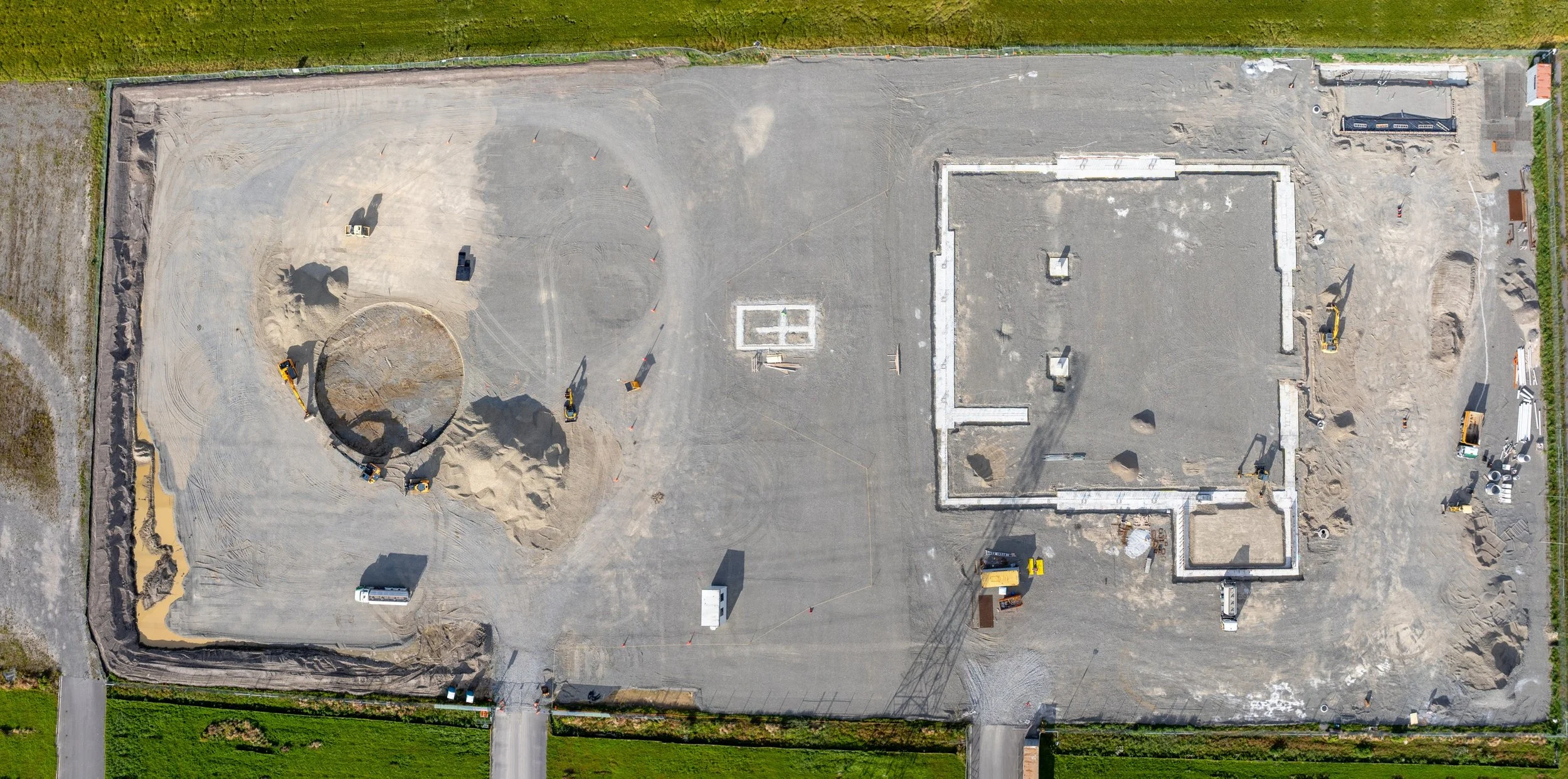
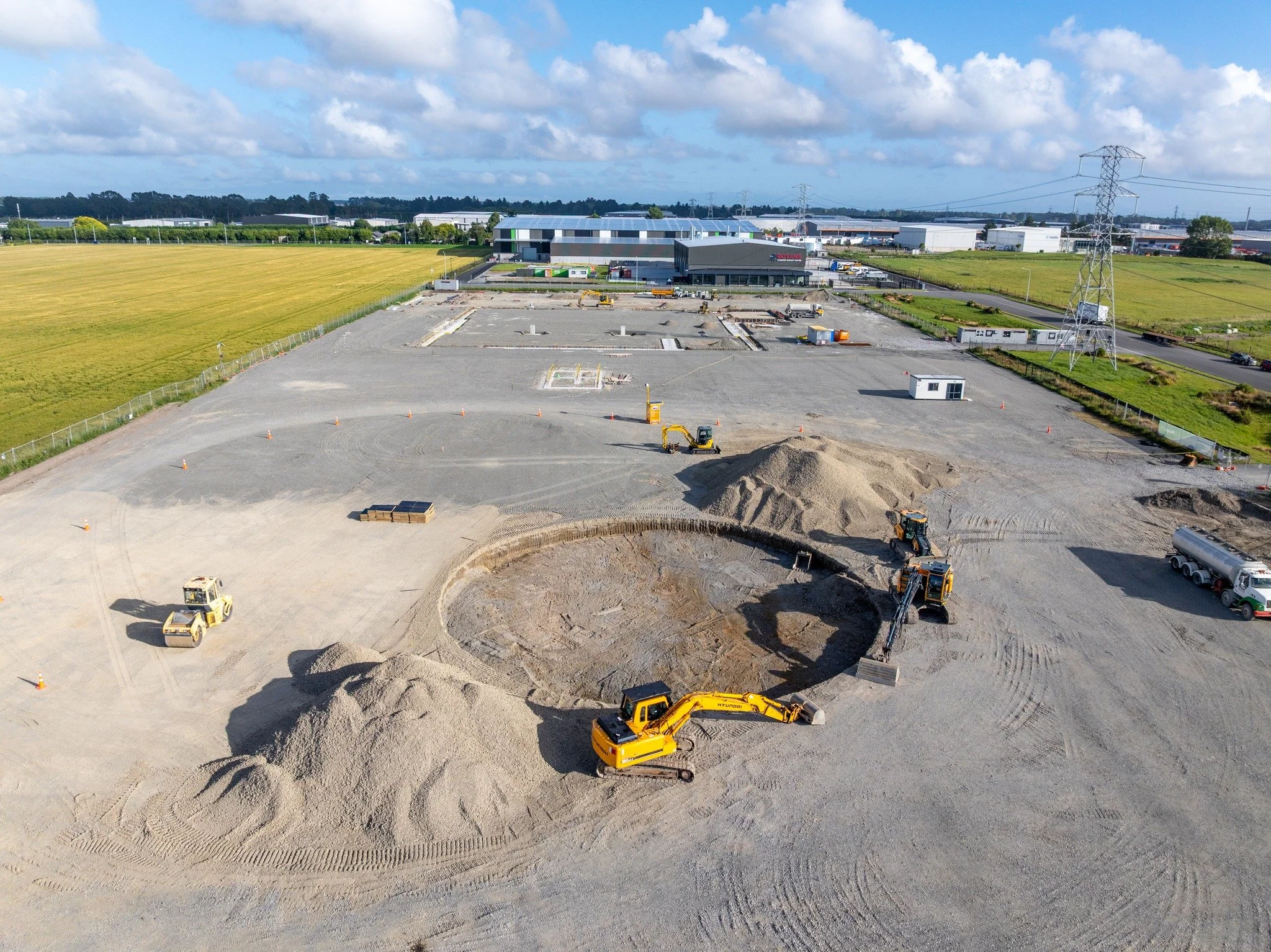
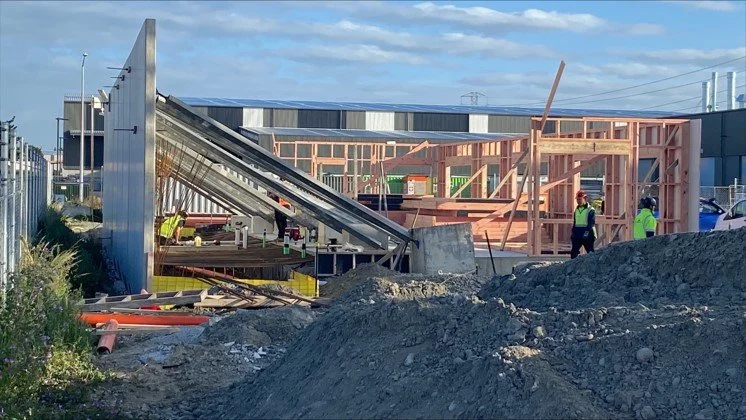
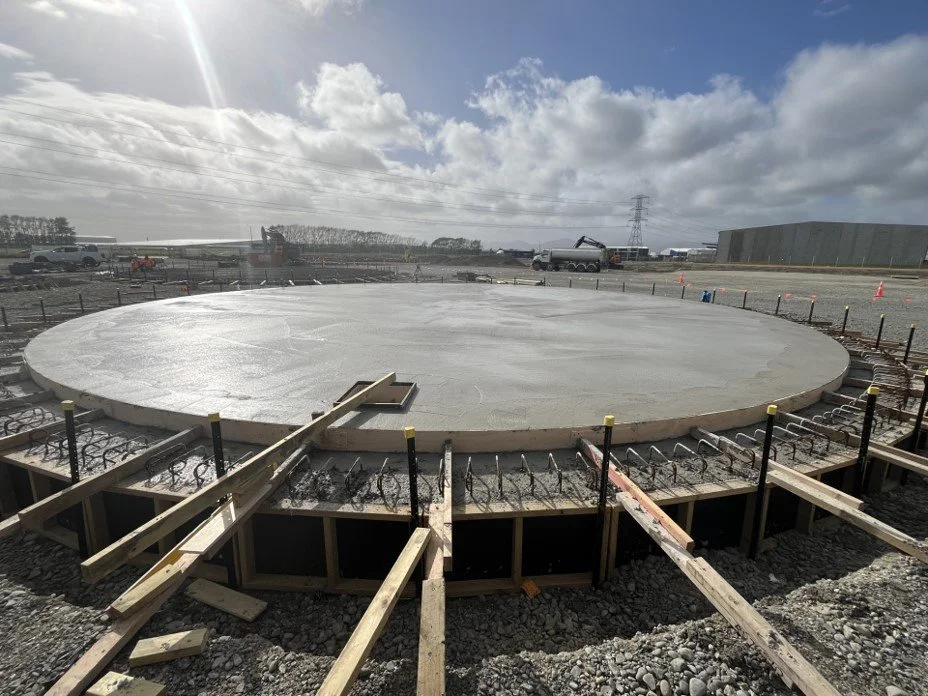
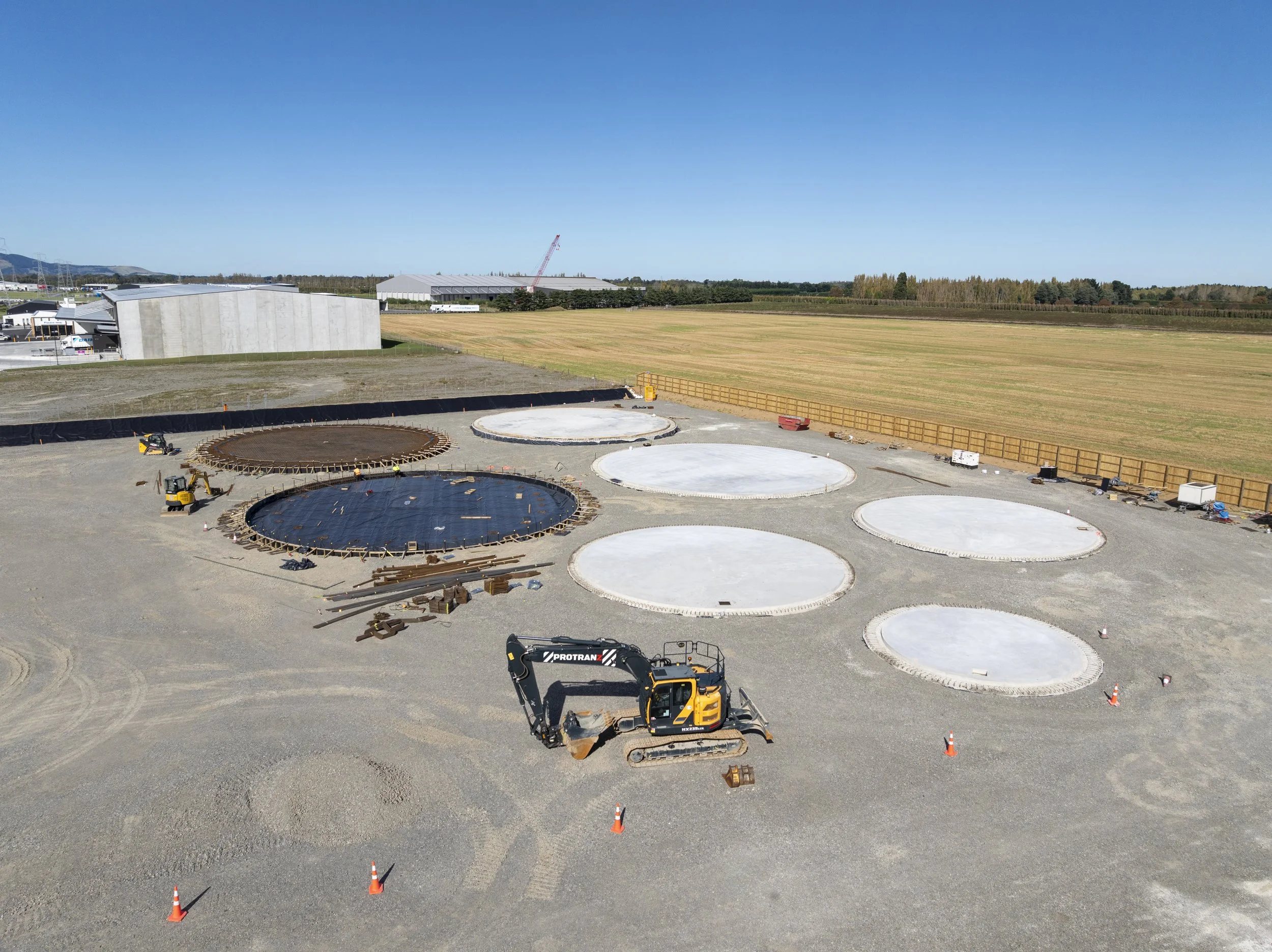
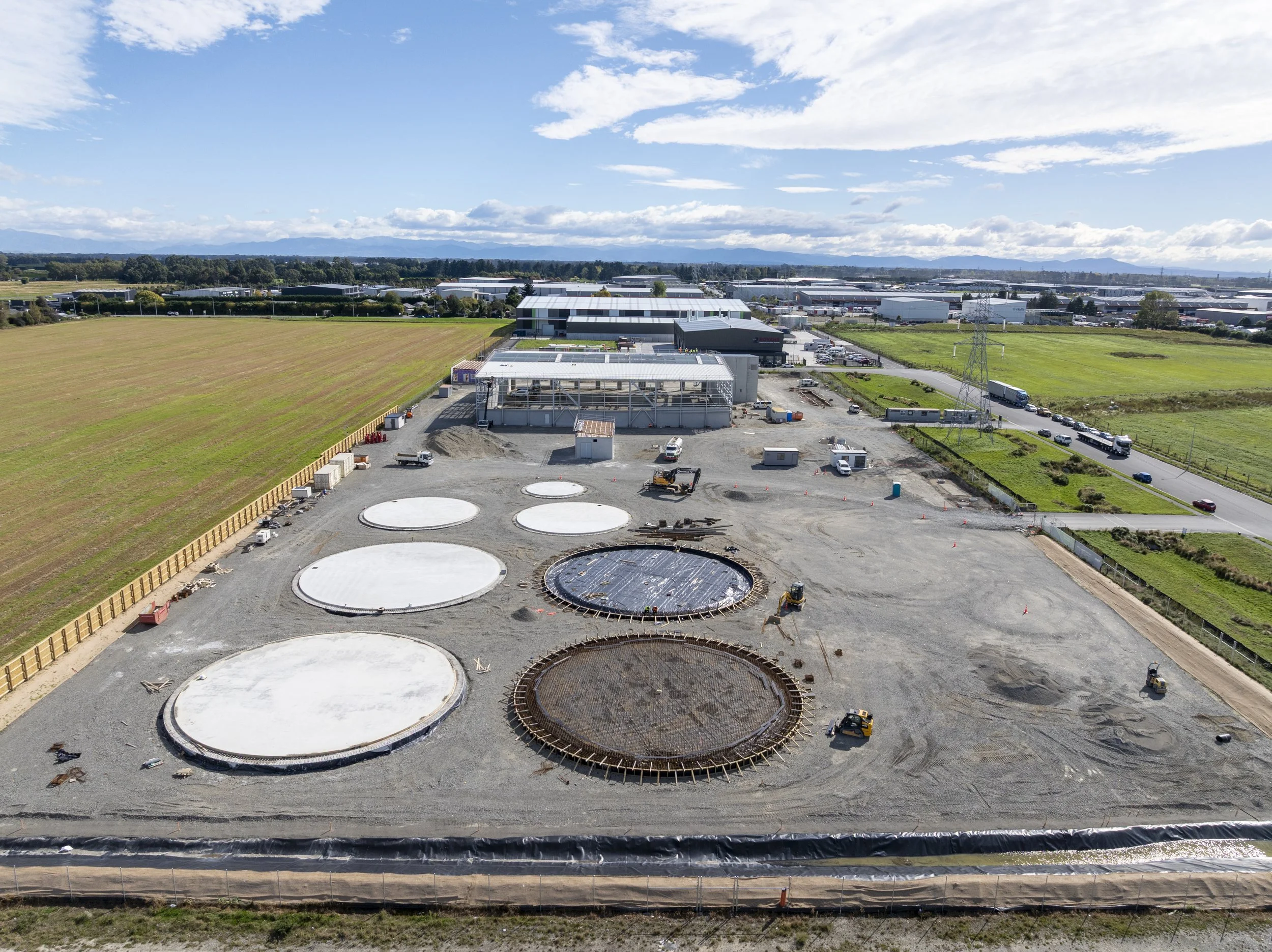
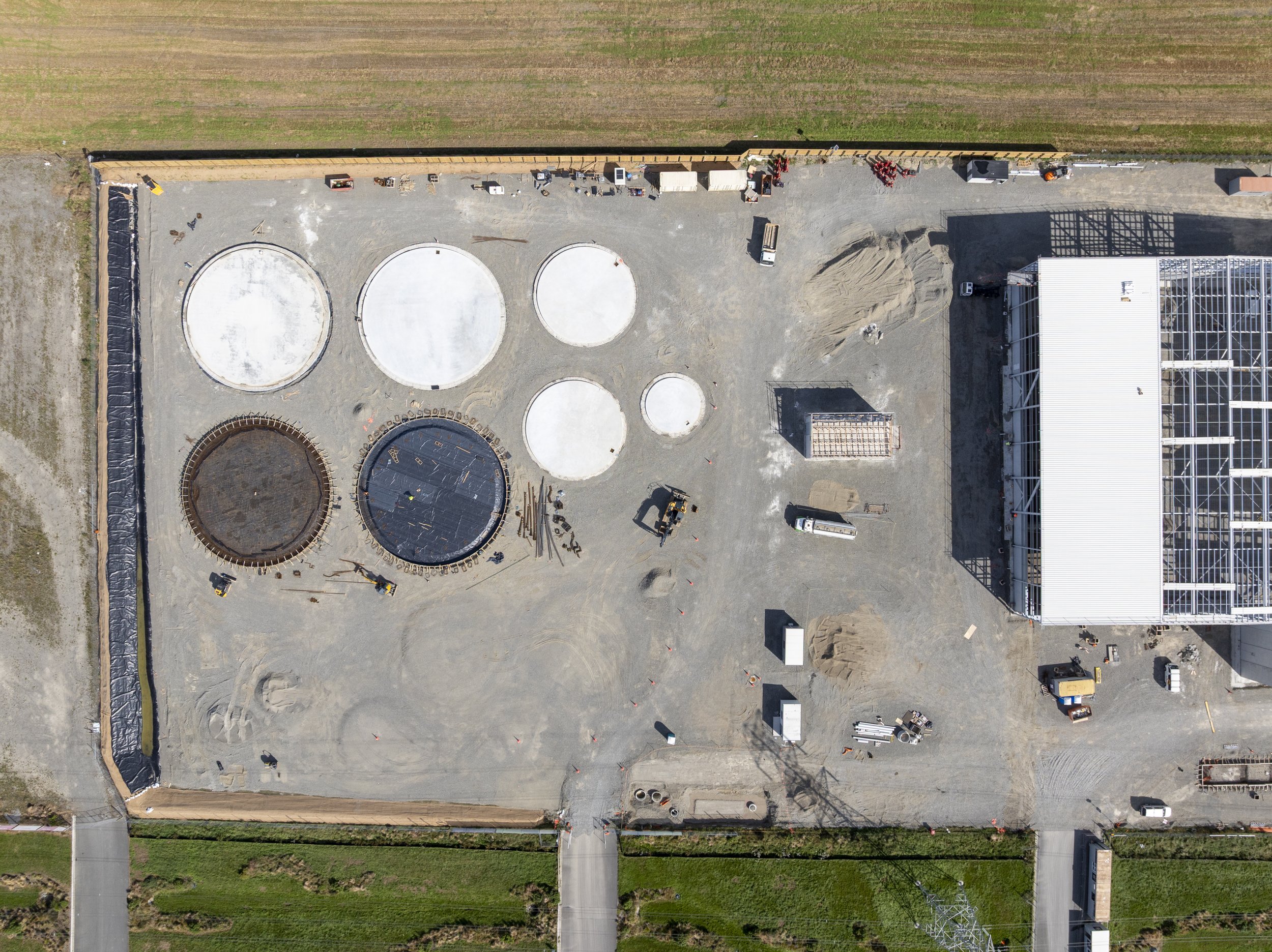
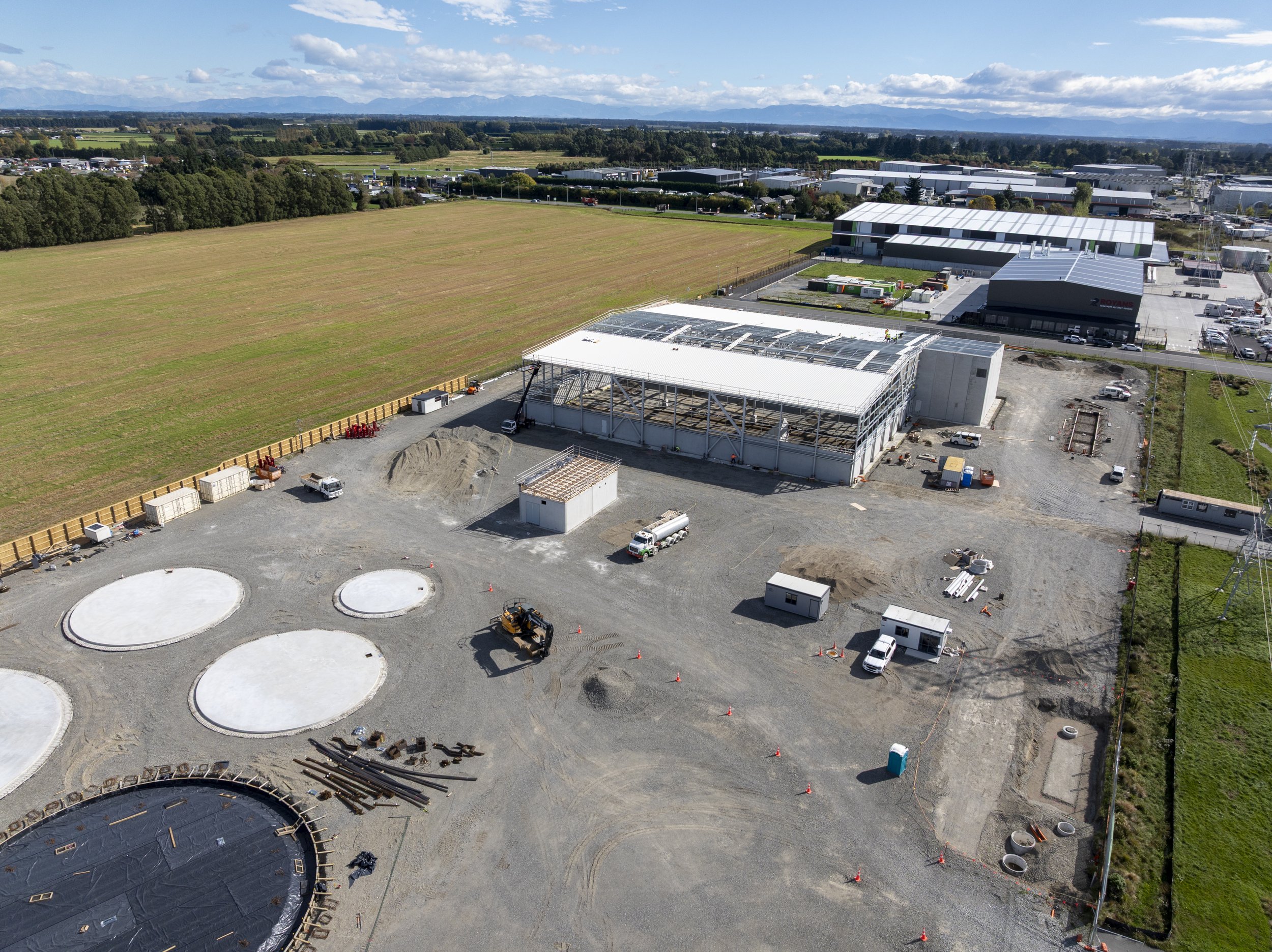
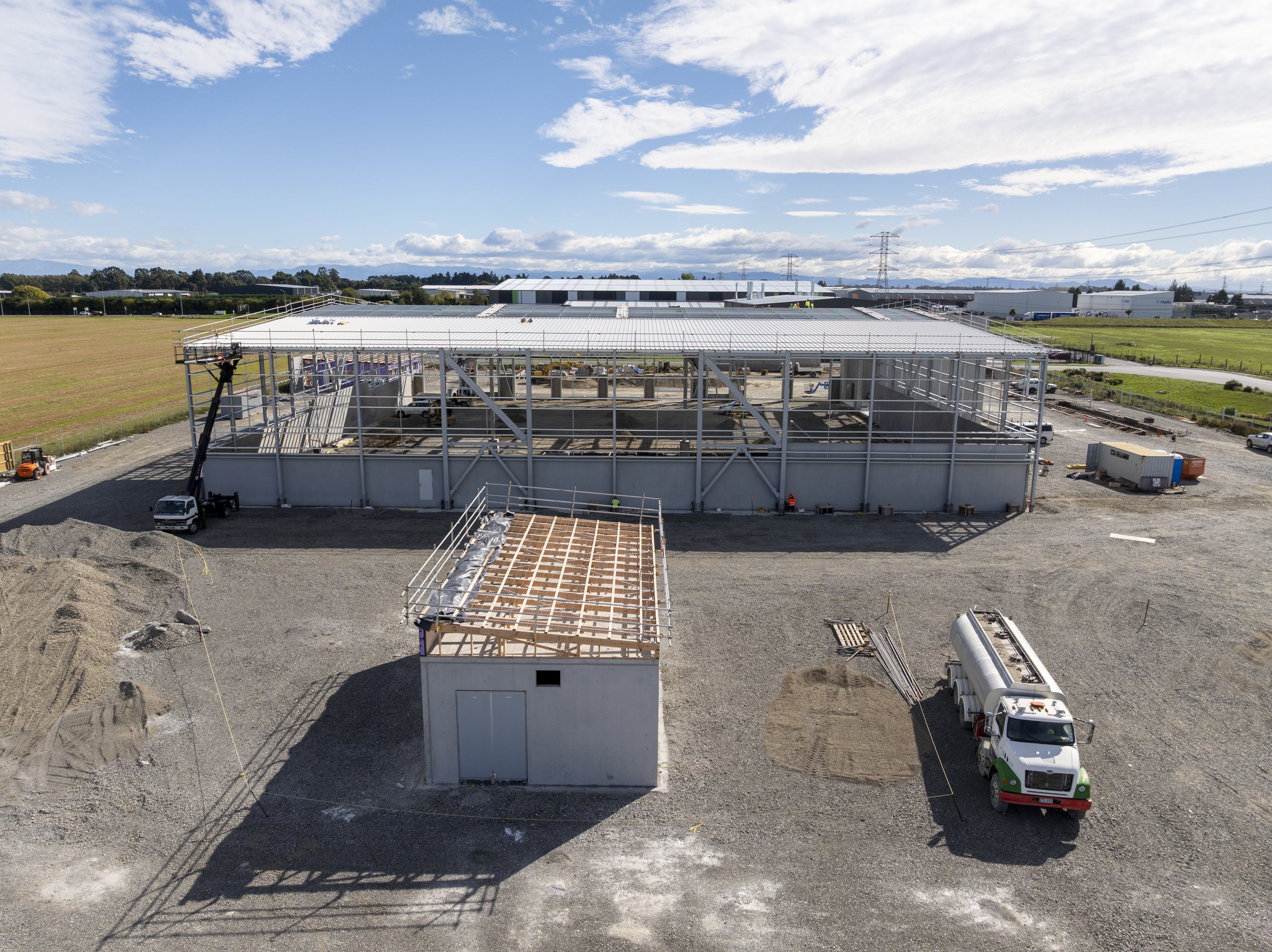
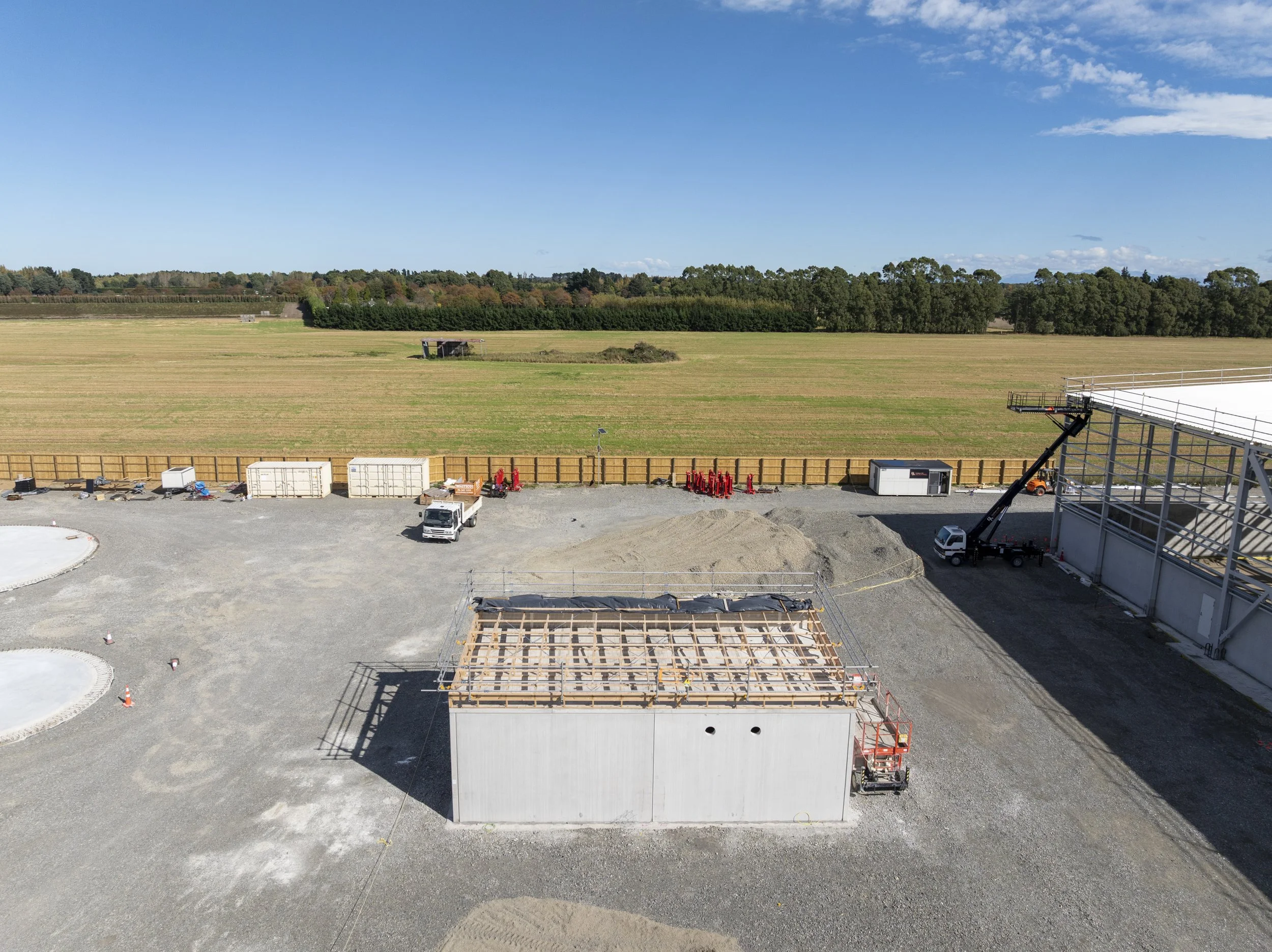
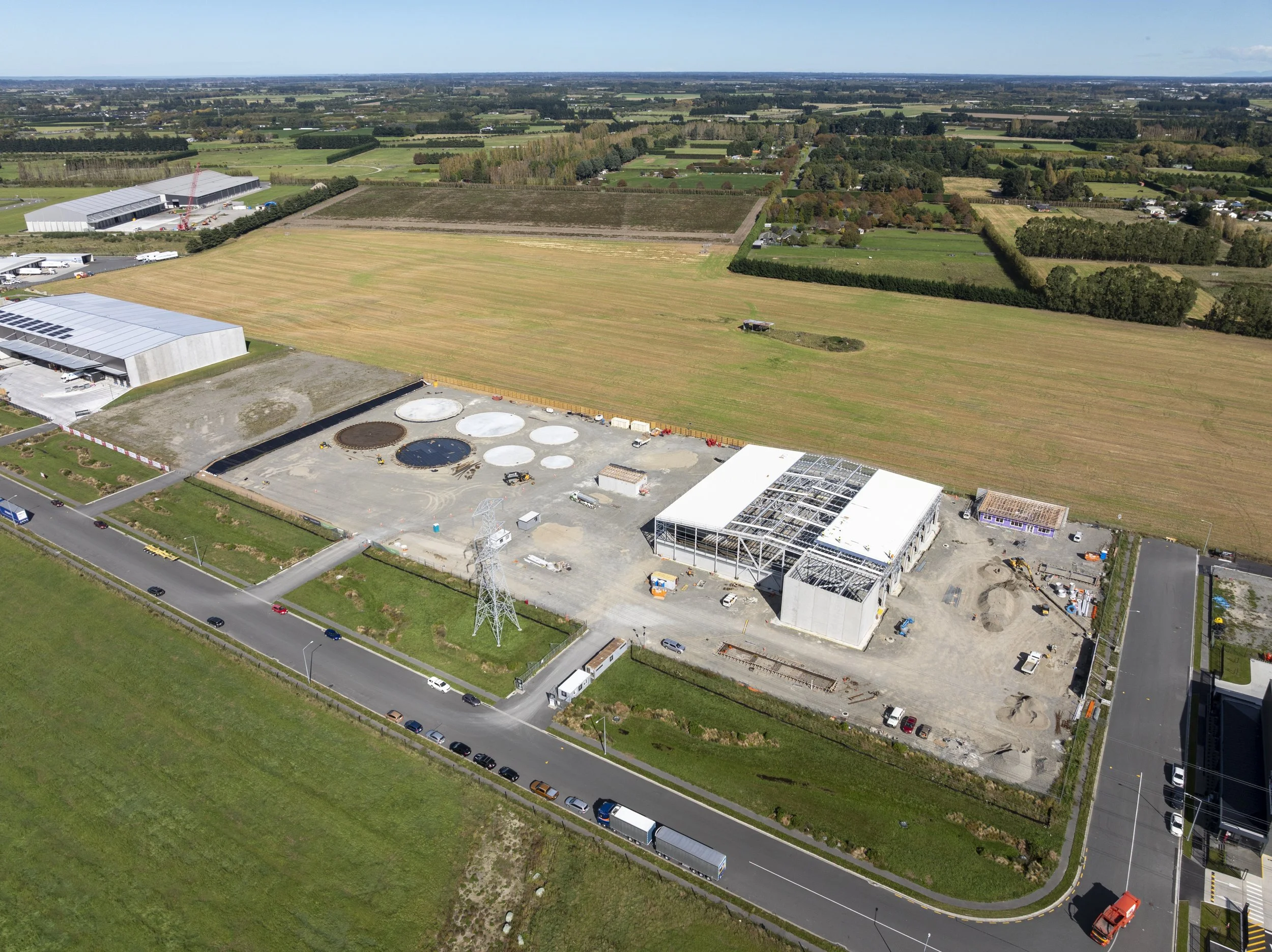
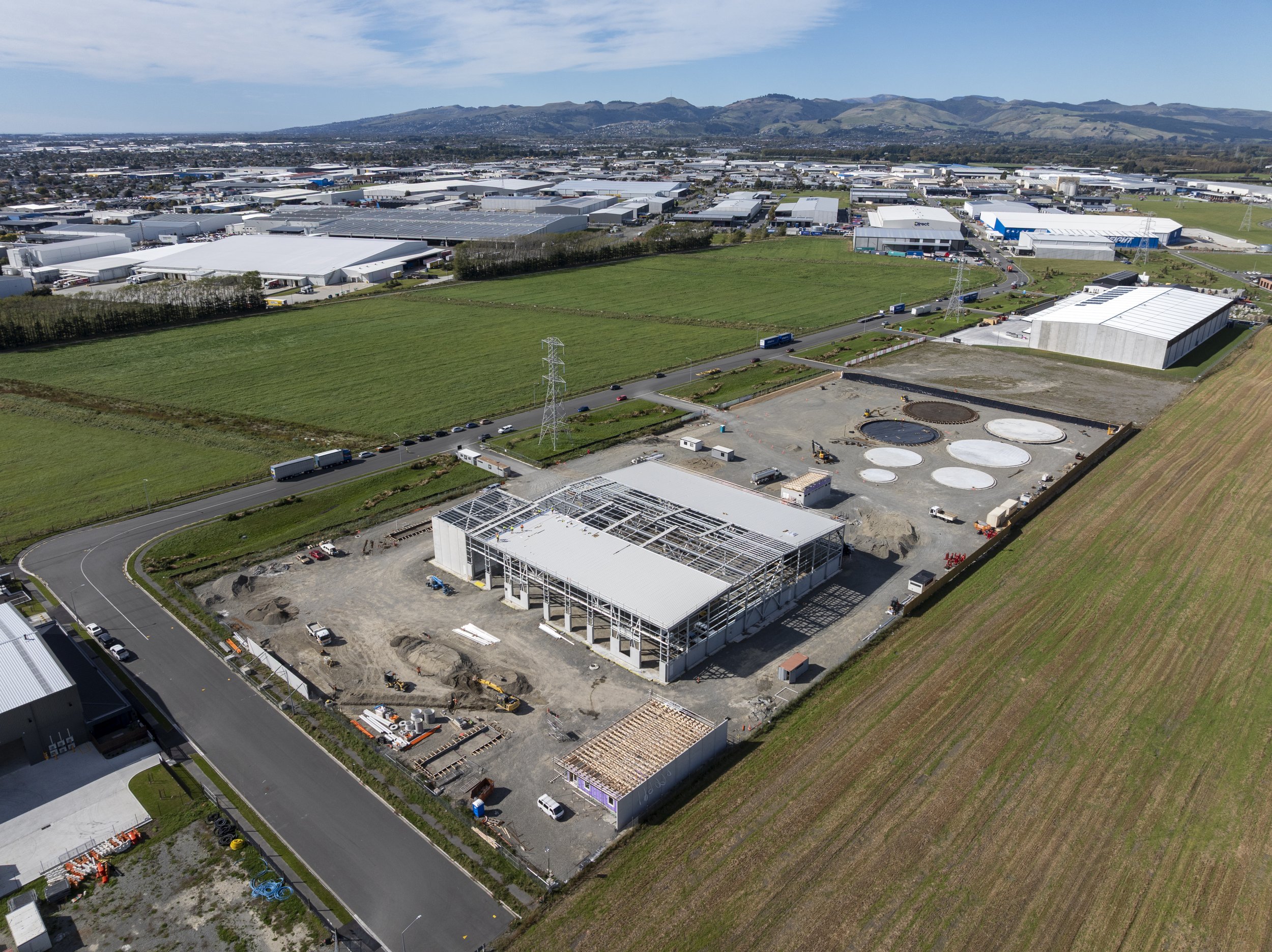
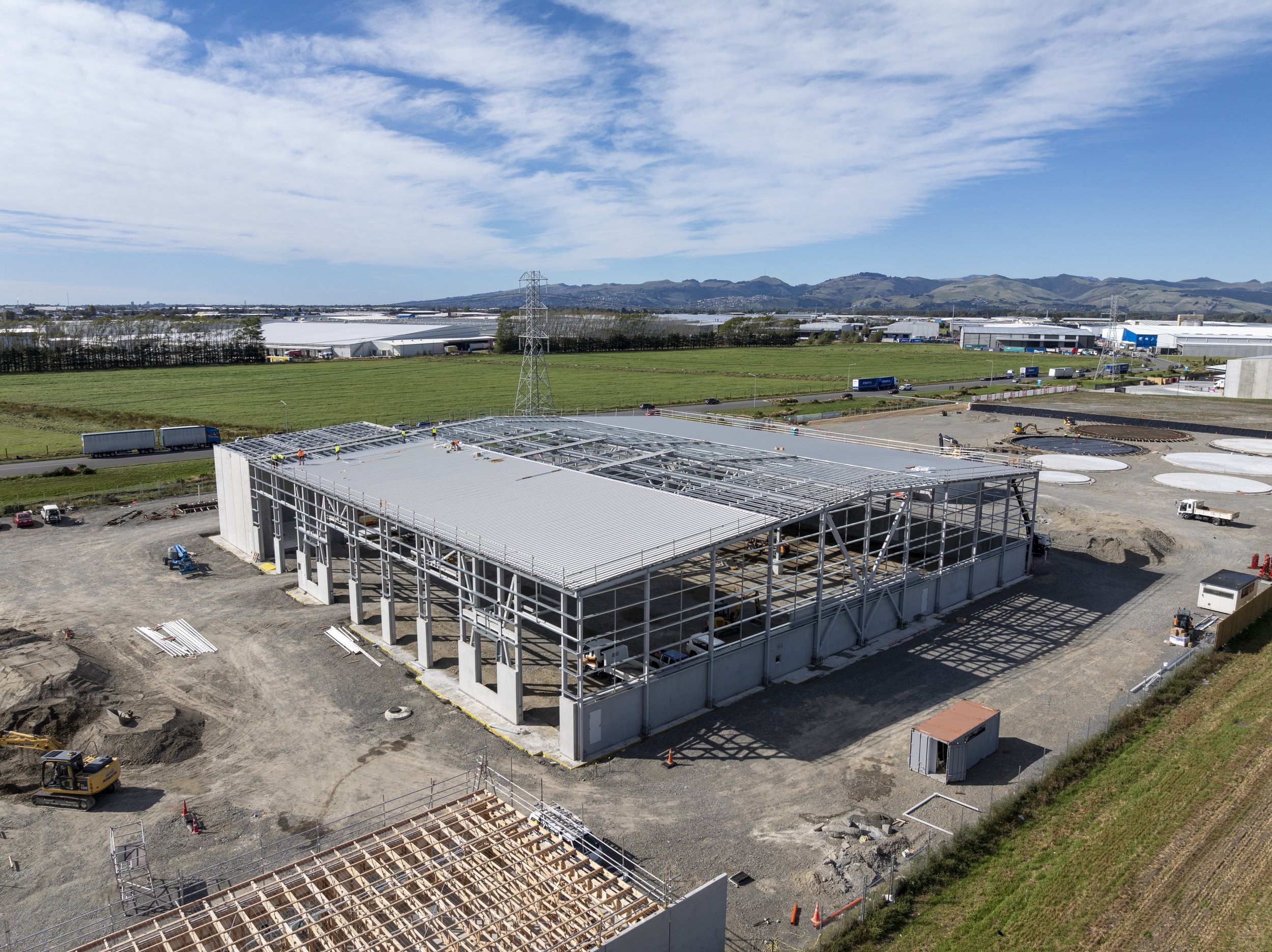
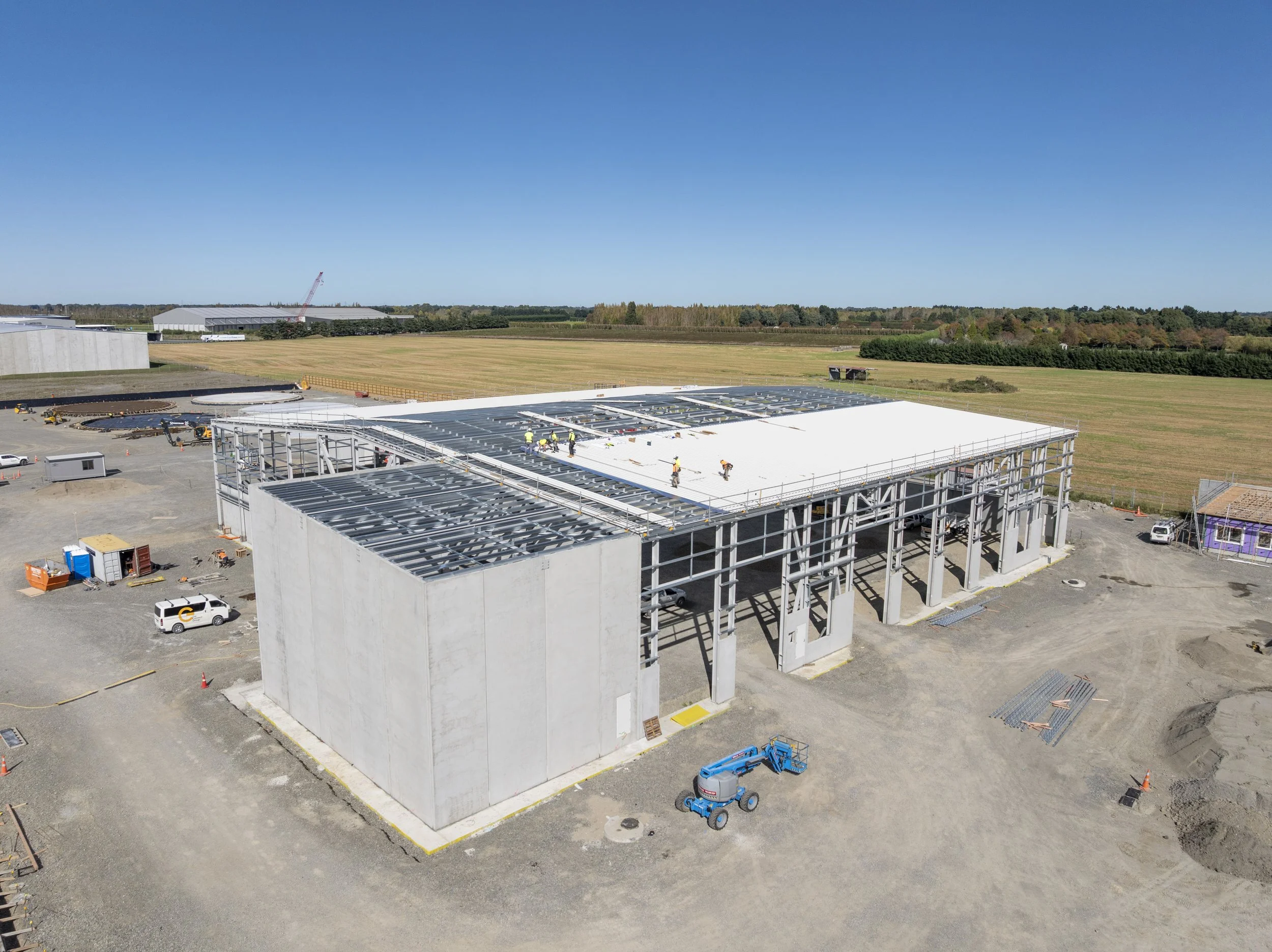
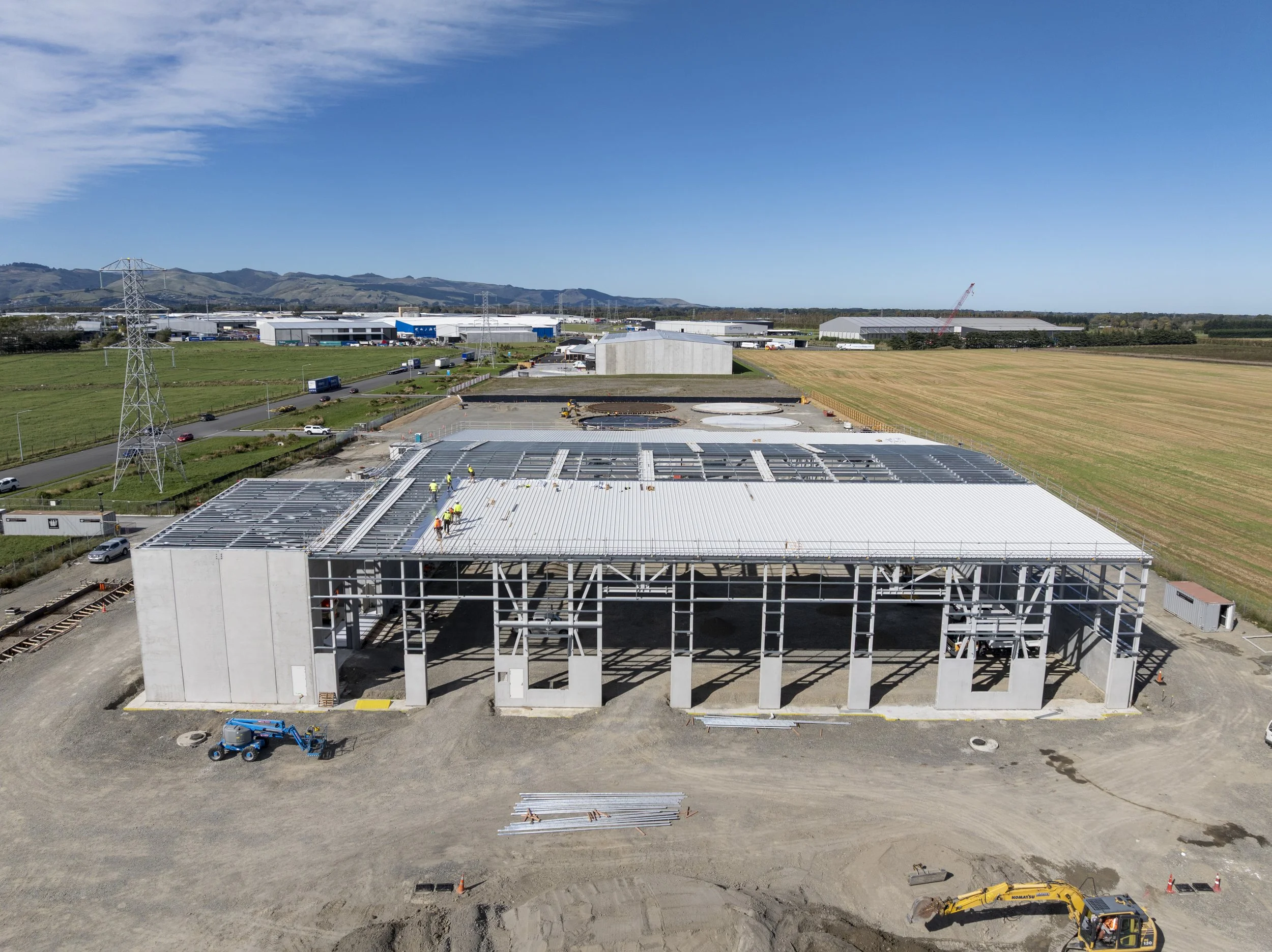
Ōtautahi Christchurch facility construction
Progress photos as the facility is built
Frequently asked questions
-
The Organics Processing Facility (OPF) will be located at Aruhe Road, South Hornby, in an industrial estate zoned for heavy industrial activity.
-
The Ecogas plant is primarily an energy production facility that converts organic waste into energy (gas, heat, and electricity) and digestate (fertiliser). It uses a completely different process from the current plant in Bromley which composts organic material.
A commercial energy production facility is best co-located alongside other industries and businesses who can purchase energy close to where it is being produced.
The site is owned by Ecogas in an area zoned for heavy industrial activity where there are industrial neighbours and good transport links. This is close enough to the city to minimise any impact on the Council’s existing kerbside collection. Ecogas looked at several sites and Hornby was the best fit.
-
The Organics Processing Plant in Bromley is owned by the Council and will still be in operation until the new facility comes online and services are transitioned across.
The South Hornby site is owned by Ecogas and is in a better location for supplying both energy and services.
-
The site is approximately 3 hectares and sits within a heavy industrial park in the South Hornby area.
-
Ecogas are taking a multi-layered approach to managing odour.
The new facility will be enclosed with no outside storage or processing of materials. The design features technology such as a filter and rapid close doors. The kerbside food waste will be processed quickly on arrival, with contamination removed before it is pumped into the fully sealed anaerobic digestion tanks.
-
The Bromley Organics Processing Plant uses a composting methodology to process kerbside organics.
The Ecogas Organics Processing Facility uses Anaerobic Digestion for wetter materials including the kerbside collections. The more fibrous greenwaste streams will be run through our biomass processing line. Both waste streams will be processed quickly and in a completely enclosed environment.
The two processes are completely different in terms of outputs, operations and effects on neighbouring communities and cannot be considered comparable.
For more information on how Anaerobic Digestion works, see How it Works for more information and general FAQs.
-
The site is located between SH1 and SH76 in an industrial estate designed for heavy traffic. The proximity to arterial routes means that trucks should not be travelling through residential areas.
All drivers coming on site will be inducted. This will inform them of the routes to take to minimise impact on the community.
-
Our management systems include contingency and business continuity planning to ensure we quickly resolve any incidents. The design of the facility adheres to all applicable building and industry standards including for earthquake resilience.
The biogas tanks are designed to the natural gas standards and are low pressure systems. The site will be bunded (raised perimeter) in key areas to contain any liquid spills.
-
It is planned that the facility operates from 6am to 6pm Monday to Friday. There may be weekend activity to cater for situations such as public holidays.
-
Biomass is essentially chipped and dried wood and fibrous material. It is used as a renewable replacement fuel in industrial boilers.
The biomass processing at the Christchurch OPF will take the city’s greenwaste, chip and dry it into a usuable form.